

Essential Considerations Before Purchasing Your Tiny Home |
A Comprehensive Guide to Planning, Budgeting, and Legalities for Tiny House Living |
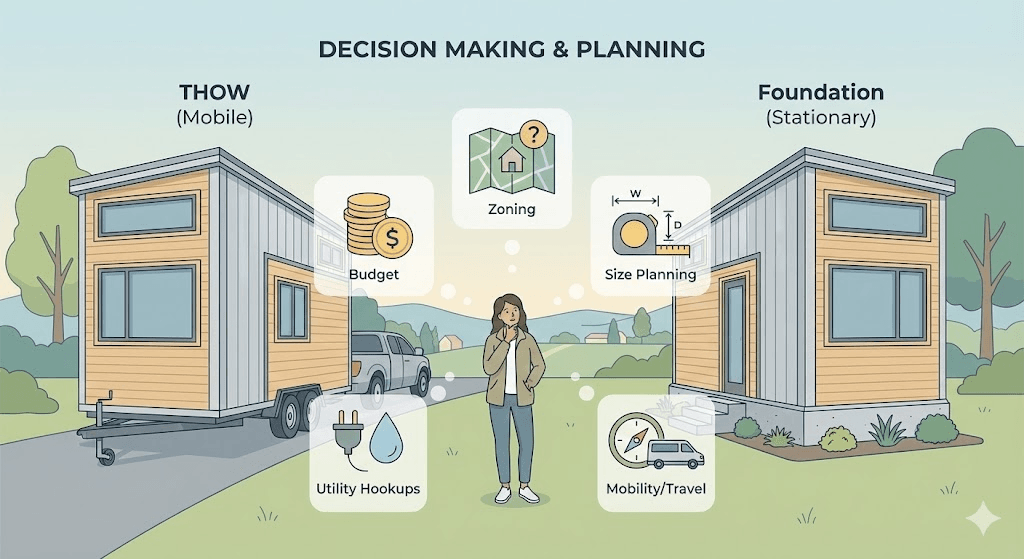
Embracing the tiny house lifestyle is more than just downsizing; it's a transformative shift towards simplicity and intentional living.
Whether you're motivated by affordability, mobility, sustainability, or a desire for minimalism, a tiny home offers numerous advantages.
However, to ensure a successful transition, it's crucial to consider several key factors before making your purchase.
1. Define Your Purpose: Why Go Tiny?
Understanding your primary motivation will guide your decisions throughout the process.
Common reasons include:
Reducing housing costs
Adopting a minimalist lifestyle
Seeking mobility with a Tiny House on Wheels (THOW)
Minimizing environmental impact
Creating a guest house or rental property
Identifying your core motivation will help you choose the appropriate type, size, layout, and location for your tiny home.
2. Mobility vs. Stationary Living
Tiny homes generally fall into two categories:
Tiny House on Wheels (THOW):
Ideal for those desiring flexibility or travel opportunities.
They offer freedom but require adherence to towing regulations and ongoing maintenance of the trailer components.
Foundation Tiny Home:
Suitable for individuals seeking a permanent residence.
They provide greater design flexibility, enhanced utility connections, and increased long-term durability.
Deciding between mobility and a stationary setup is a significant factor influencing the construction and legal considerations of your home.
3. Zoning, Placement, and Legal Requirements
Before purchasing, it's essential to determine where your tiny house can legally reside.
Research the following:
Local zoning laws
Minimum square footage requirements
Regulations for THOWs versus foundation homes
Utility hookup guidelines
Homeowners Association (HOA) restrictions
Classification of tiny homes (e.g., RVs, Accessory Dwelling Units)
Recent legislative changes have impacted tiny home regulations in various regions.
For instance, in 2025, California passed Senate Bill 79, known as the Abundant and Affordable Homes Near Transit Act, which facilitates the construction of multi-family housing near public transit stations by overriding local zoning restrictions.
Similarly, in 2024, Denver approved citywide construction of Accessory Dwelling Units (ADUs), simplifying the process for homeowners to add such units to their properties.
Staying informed about local regulations will help you avoid the common issue of owning a tiny house without a legal place to park or build it.
4. Budgeting Beyond the Purchase Price
While tiny homes are generally more affordable than traditional houses, it's important to account for additional expenses:
Land acquisition or monthly parking fees
Utility connections (septic, water, electrical)
Maintenance and repairs
Insurance
Towing and transportation costs
Appliances and furnishings
Optional off-grid enhancements (solar panels, composting toilets, water storage systems)
Accurate budgeting from the outset will contribute to a smoother tiny living experience.
5. Space Planning: Can You Live with Less?
Transitioning to a tiny home requires thoughtful design and honest self-assessment.
Consider:
Your daily routines
The number of occupants (including pets)
Storage needs
Workspace requirements
Desired level of privacy
Comfort with ceiling heights, loft accessibility, and bathroom dimensions
Many individuals underestimate their space requirements.
Utilizing 3D models or touring existing tiny homes can help visualize and plan your future living space effectively.
6. Utilities, Off-Grid Options, and Sustainability
Tiny homes offer unique choices not typically available in traditional housing:
Off-Grid Features:
Solar power systems
Propane heating
Composting toilets
Rainwater collection systems
Wood stoves or high-efficiency mini-split systems
On-Grid Options:
Standard sewer and water hookups
30 or 50-amp electrical connections
High-speed internet access
Determine which utilities align with your lifestyle, climate, and location preferences.
7. Choosing the Right Builder
Selecting a reputable builder is crucial to your tiny home journey.
Look for:
Licensed, insured, and experienced professionals
Comprehensive portfolios and 3D renderings
Transparent pricing structures
Positive client testimonials
Warranty options
Knowledge of state-specific building codes
Expertise in THOW-specific engineering (if applicable)
Don't hesitate to inquire about materials, insulation, ventilation, and moisture management, as these factors are vital in small living spaces.
Final Thought: Tiny Houses Require Big Planning
Purchasing a tiny home involves more than acquiring a structure; it's about designing a lifestyle.
With careful planning regarding mobility, zoning, budgeting, utilities, and long-term needs, your tiny home can provide freedom, comfort, and financial peace for years to come.
By considering these factors, you can make informed decisions that align with your goals and ensure a successful transition to tiny living. |
0 Comments
Join the conversation
Be the first to comment
Share your thoughts above.